
Thyroid and Stress: Can Stress Affect Thyroid Health?
Have you ever noticed that your energy, sleep, mood, or overall health changes when you are under stress? Stress can affect many functions of the body, including the systems responsible for hormone regulation. This is why many people wonder about the connection between thyroid and stress.
The thyroid is a small, butterfly-shaped gland located at the front of the neck. It produces thyroid hormones that help regulate metabolism, body temperature, heart rate, and energy levels. When the thyroid produces too much or too little hormone, it can lead to different symptoms and health concerns.
Stress may influence the body's hormonal and immune responses, and researchers have studied how it may interact with thyroid function. However, stress does not automatically cause a thyroid disorder. The relationship between thyroid and stress is complex and can vary from person to person.
In this blog, we will understand how stress may affect thyroid health, the symptoms to watch for, and simple ways to manage stress and support overall well-being.
What Is the Connection Between Thyroid and Stress?
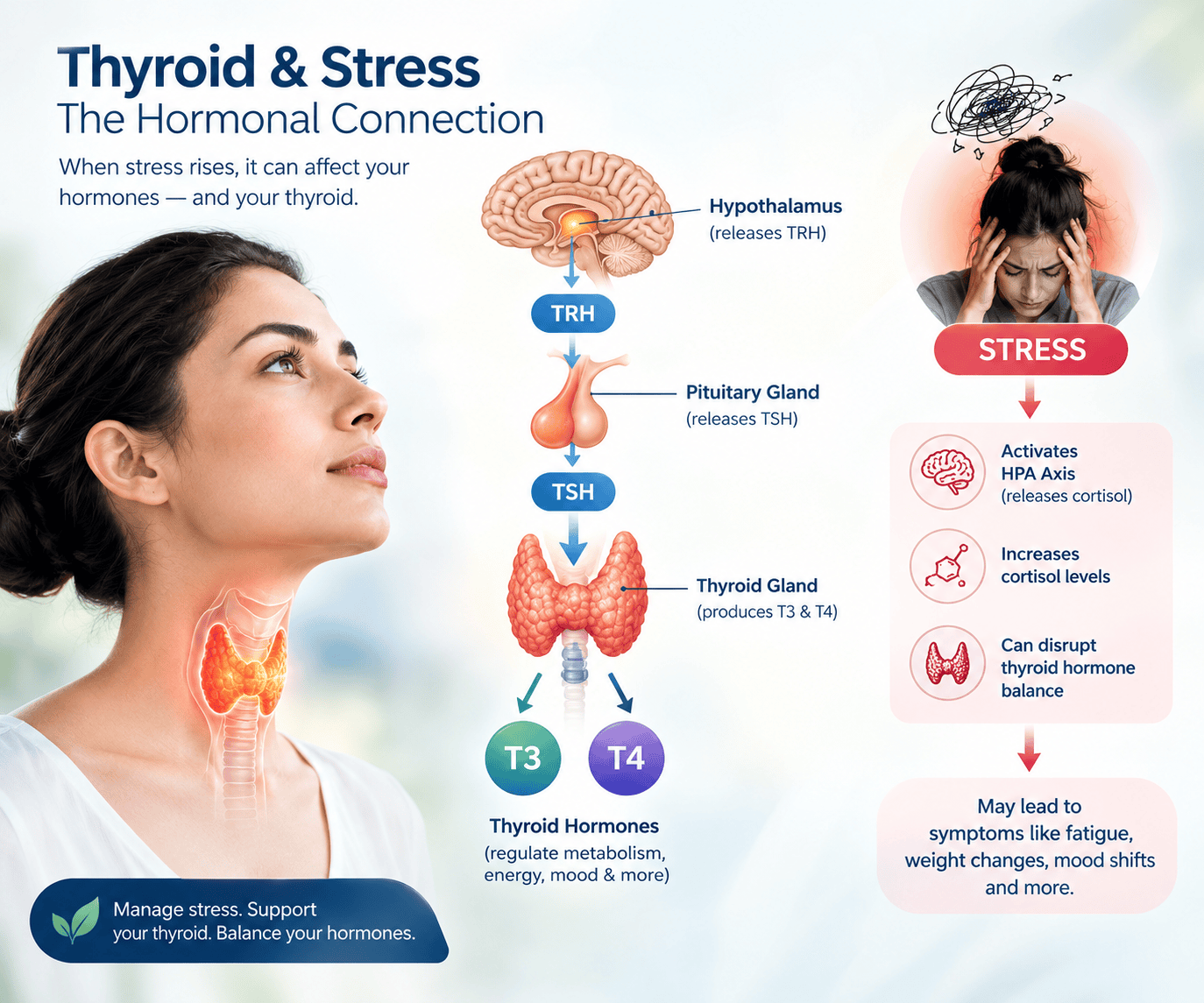
The thyroid gland is part of a larger hormonal communication system involving the hypothalamus, pituitary gland, and thyroid. This system helps regulate the production and release of thyroid hormones.
When the body experiences stress, another system called the hypothalamic-pituitary-adrenal axis becomes active. This system helps the body respond to stressful situations and involves hormones such as cortisol.
Because these hormonal systems communicate with each other, prolonged or significant stress may influence thyroid hormone regulation. However, the effects are not the same for everyone.
It is important to understand that experiencing stress does not necessarily mean that you have a thyroid disorder. Persistent thyroid-related symptoms should be evaluated by a healthcare professional rather than being attributed to stress alone.
Can Stress Affect Thyroid Health?
Yes, stress may influence thyroid hormone regulation and interact with the body's immune response. However, current evidence does not show that everyday stress directly causes thyroid disease in everyone.
Researchers have studied whether significant or prolonged stress may contribute to the development or worsening of autoimmune thyroid conditions. Although a possible connection has been observed, stress is not considered a single proven cause of thyroid disease.
There are several ways in which thyroid and stress may be connected.
Stress and Thyroid Hormone Regulation
During stressful situations, the body releases hormones that help it respond to challenges. These changes can interact with the systems involved in thyroid hormone regulation.
Prolonged stress may influence how the body regulates thyroid hormones, although the extent of this effect can vary between individuals.
Stress and Autoimmune Thyroid Conditions
Some thyroid conditions are autoimmune disorders. This means the immune system mistakenly attacks the thyroid gland.
Two common autoimmune thyroid conditions include:
Hashimoto's thyroiditis, which commonly leads to an underactive thyroid.
Graves' disease, which commonly causes an overactive thyroid.
Researchers have explored whether major stress may influence immune activity and autoimmune thyroid conditions. However, stress should not be considered the only cause of these disorders.
Stress Can Make Symptoms Harder to Manage
People with thyroid problems may already experience symptoms such as tiredness, sleep difficulties, mood changes, or problems with concentration.
Stress can also contribute to poor sleep, anxiety, tiredness, and difficulty concentrating. Because these symptoms can overlap, it may sometimes be difficult to determine whether they are related to stress, thyroid hormone levels, or another health issue.
Common Symptoms of Stress and Thyroid Problems
Stress and thyroid disorders can sometimes produce similar symptoms. This is why symptoms alone cannot confirm whether someone has a thyroid problem.
Some symptoms that may occur with stress include:
Feeling anxious or overwhelmed
Difficulty sleeping
Tiredness
Changes in appetite
Difficulty concentrating
Mood changes
Thyroid disorders can also cause different symptoms.
An underactive thyroid may be associated with:
Fatigue
Feeling unusually cold
Constipation
Dry skin
Weight gain
Difficulty concentrating
An overactive thyroid may be associated with:
Nervousness or anxiety
Racing heartbeat
Increased sweating
Heat intolerance
Tremors
Unexplained weight loss
Sleep difficulties
These symptoms can have many possible causes. If they persist, proper medical evaluation is important.

Does Stress Cause Hypothyroidism or Hyperthyroidism?
Stress is not considered a direct and proven cause of hypothyroidism or hyperthyroidism.
Hypothyroidism occurs when the thyroid gland does not produce enough thyroid hormones. Hashimoto's thyroiditis is one of the common causes of an underactive thyroid, although other factors can also contribute.
Hyperthyroidism occurs when the thyroid gland produces too much thyroid hormone. Graves' disease is one of the common causes of an overactive thyroid.
Some research has investigated the relationship between significant stress and autoimmune thyroid conditions. However, this does not mean that every stressful experience causes thyroid disease.
If you have ongoing symptoms, it is better to consult a healthcare professional instead of assuming that stress is the only reason.
How to Manage Stress for Better Thyroid Health
Managing stress can support overall health, sleep, mood, and daily well-being. If you have a thyroid condition, stress management should be considered an addition to proper medical care, not a replacement for prescribed treatment.
1. Maintain a Regular Sleep Schedule
Getting enough quality sleep can help your body recover from daily stress.
Try to maintain a consistent sleeping and waking schedule. A relaxing bedtime routine and a comfortable sleeping environment may also support better sleep.
2. Practice Relaxation Techniques
Simple relaxation techniques can help you manage everyday stress.
You can try:
Deep or slow breathing, Meditation, Mindfulness, Gentle stretching, Taking short breaks, Spending time in a calm environment.
Choose a method that is comfortable and realistic for your daily routine.
3. Stay Physically Active
Regular physical activity can support mood, sleep, and overall health.
Walking, cycling, stretching, yoga, or other suitable activities can be useful ways to stay active. If you have a thyroid condition or another health concern, choose an exercise level that is appropriate for you.
4. Eat a Balanced Diet
A balanced diet can support overall health. Include a variety of vegetables, fruits, whole grains, protein sources, and healthy fats in your meals.
Avoid taking high-dose iodine supplements or thyroid-related supplements without professional advice. Certain supplements may affect thyroid function or interact with medications.
5. Make Time for Yourself
Taking regular breaks and making time for activities you enjoy can help you manage everyday stress.
Talking with friends or family, spending time outdoors, practicing hobbies, or simply taking a break from work can support emotional well-being.
If stress becomes overwhelming or starts interfering with your daily life, consider speaking with a qualified healthcare or mental health professional.

When Should You See a Doctor?
You should consider speaking with a healthcare professional if you experience persistent or unexplained symptoms such as:
Ongoing fatigue, Unexplained weight gain or weight loss, Persistent anxiety or nervousness, Difficulty sleeping, Racing or irregular heartbeat, Changes in bowel habits, Increased sensitivity to heat or cold, Swelling or a lump in the neck.
A healthcare professional can review your symptoms, medical history, and medications and may recommend thyroid blood tests when appropriate.
Common thyroid tests can include thyroid-stimulating hormone (TSH) and free T4 testing.
If you already have a diagnosed thyroid condition, continue following your healthcare professional's advice and take prescribed medication as directed.
Frequently Asked Questions About Thyroid and Stress
Can stress affect thyroid hormone levels?
Stress may influence the hormonal systems involved in thyroid regulation. However, the effect varies between individuals, and stress alone cannot determine whether thyroid hormone levels are abnormal.
Can stress cause thyroid problems?
Stress has been studied as a possible contributing factor in autoimmune thyroid conditions, but it is not considered a proven single cause of thyroid disease.
Can reducing stress improve thyroid health?
Managing stress may support better sleep, mood, energy, and overall well-being. However, stress management does not replace thyroid medication or medical treatment when treatment is required.
What is the best way to check thyroid health?
A healthcare professional can evaluate your symptoms and medical history and recommend appropriate thyroid blood tests, commonly including TSH and free T4.
Can stress make thyroid symptoms worse?
Stress can produce symptoms such as tiredness, anxiety, sleep problems, and difficulty concentrating, which may overlap with symptoms of thyroid disorders. This can make existing symptoms feel more difficult to manage.
Conclusion
The connection between thyroid and stress is complex. Stress may influence hormonal regulation, interact with immune responses, and make certain symptoms more difficult to manage. However, stress does not automatically cause thyroid disease.
Maintaining healthy sleep habits, staying physically active, eating a balanced diet, and practicing relaxation techniques can support your overall well-being.
If you experience persistent or unexplained symptoms, do not assume that stress is the only cause. Speak with a qualified healthcare professional for proper evaluation and guidance.
Taking care of both your physical and emotional well-being can be an important part of maintaining a healthy lifestyle.
Medical Disclaimer: This article is for general educational purposes only and is not a substitute for professional medical advice, diagnosis, or treatment.