

Thyroid and Sleep: Why Good Sleep Matters for Overall Wellness
A good night’s sleep helps you feel refreshed, think clearly, and manage everyday activities. But if you have a thyroid condition, you may notice changes in your sleep pattern, energy levels, or ability to feel rested.
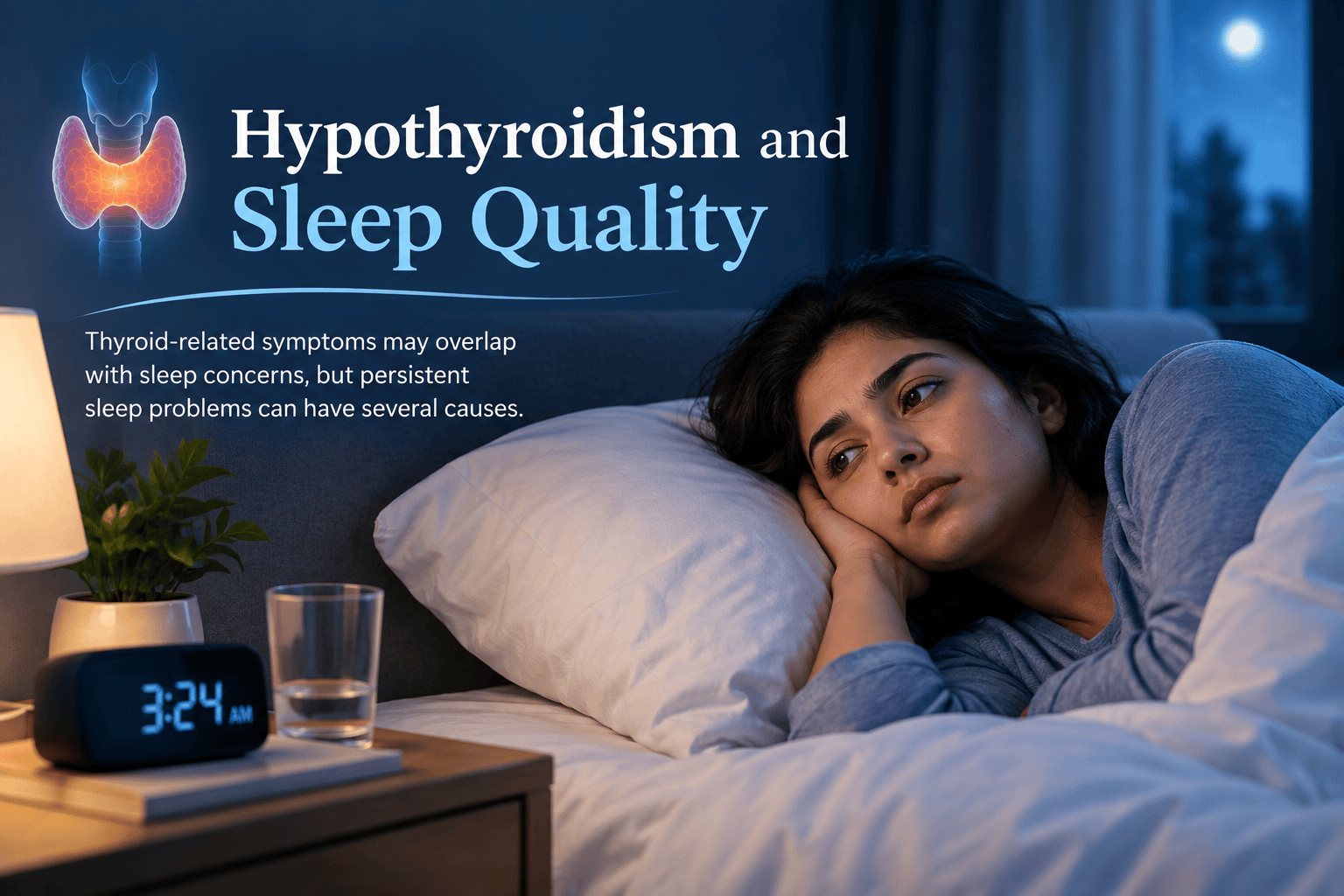
The connection between thyroid and sleep is complex. Thyroid hormones help regulate many body functions, and sleep is connected with the body’s hormone rhythms. Some people with thyroid disorders experience difficulty sleeping, while others feel tired or sleepy during the day. However, sleep problems can have many causes, so they should not automatically be blamed on the thyroid.
In this guide, we’ll explain how thyroid conditions may affect sleep, which symptoms to notice, and what healthy sleep habits may help support overall wellness.
What Is the Connection Between Thyroid and Sleep?
The thyroid is a small, butterfly-shaped gland at the front of the neck. It produces hormones that help regulate how the body uses energy and supports functions such as heart rate and body temperature.
Sleep and thyroid hormone activity are connected through the body’s daily rhythms. Research suggests that sleep patterns and thyroid hormone regulation influence one another, but the exact relationship is still being studied. A sleep problem alone does not mean that someone has a thyroid disorder.
How Hypothyroidism May Affect Sleep
Hypothyroidism occurs when the thyroid gland does not produce enough thyroid hormones. It can cause symptoms such as tiredness, feeling cold, muscle aches, and changes in mood.
Some people with hypothyroidism report poor sleep or difficulty feeling rested. Symptoms such as discomfort, aches, or anxiety may make it harder to fall asleep or stay asleep. However, research has not established that hypothyroidism directly causes insomnia in every person.
If you have persistent tiredness or sleep difficulties, discuss them with a healthcare professional rather than assuming they are caused by your thyroid.
How Hyperthyroidism May Affect Sleep
Hyperthyroidism occurs when the thyroid produces more thyroid hormone than the body needs. It may cause nervousness, a rapid or irregular heartbeat, sweating, heat intolerance, and trouble sleeping.
These symptoms can make it difficult for some people to relax at bedtime or remain asleep through the night. If you notice ongoing sleep difficulty along with symptoms such as a racing heartbeat, tremors, or unusual heat intolerance, speak with your healthcare professional.
Do not try to diagnose a thyroid condition based on sleep symptoms alone. A clinician can assess your symptoms and decide whether thyroid testing is appropriate.
Why Good Sleep Matters for Overall Wellness
Sleep supports physical and mental well-being. Getting enough quality sleep can help you feel more alert during the day and better able to manage everyday responsibilities.
Healthy sleep habits may support:
Daytime energy: Adequate sleep helps you feel more rested.
Mood and concentration: Sleep plays an important role in emotional well-being and attention.
Daily routines: Feeling rested can make it easier to maintain regular meals, movement, and other healthy habits.
Overall health: Sleep is one part of a balanced approach to wellness, alongside medical care, nutrition, and physical activity.
Good sleep is helpful for everyone, including people managing thyroid conditions. However, improving sleep habits does not replace evaluation or treatment for a thyroid disorder.

Healthy Sleep Habits to Try
Small, consistent changes may help improve your sleep routine. Try the following habits and notice which ones work for you.
1. Keep a Consistent Sleep Schedule
Try to go to bed and wake up at similar times each day, including weekends. A regular schedule can help your body maintain a more consistent sleep-wake rhythm.
2. Make Your Bedroom Comfortable
Keep your bedroom quiet, dark, and comfortably cool. Choose bedding and sleepwear that help you feel comfortable, especially if you experience temperature sensitivity.
3. Create a Relaxing Bedtime Routine
Give yourself time to wind down before bed. You could read, take a warm shower, listen to calm music, or try gentle breathing exercises.
4. Be Mindful of Caffeine
Caffeine can affect sleep, especially when consumed later in the day. If you have trouble sleeping, consider reducing afternoon or evening caffeine and see whether it makes a difference.
5. Get Daytime Movement and Natural Light
Regular daytime activity and exposure to natural light may help support a healthy sleep-wake routine. Choose activity that suits your fitness level and follow any medical advice you have received.
6. Limit Late-Night Screen Use
If screens keep you alert or delay bedtime, try putting them away before you go to sleep. Use the time for a calming activity instead.
These habits may support sleep, but they are not a treatment for thyroid disease or a substitute for care when symptoms persist.
Does Better Sleep Improve Thyroid Function?
It is important to separate healthy sleep habits from thyroid treatment. Sleep and thyroid hormone rhythms are related, but there is no guarantee that sleeping more will correct a thyroid disorder.
If you have hypothyroidism or hyperthyroidism, follow the treatment plan recommended by your healthcare professional. Do not start, stop, or change thyroid medication or supplements to try to improve sleep without medical advice.
If you continue to feel tired or have difficulty sleeping despite following healthy habits, ask your healthcare professional whether your thyroid condition, medication, or another issue needs to be reviewed.
When Should You Speak With a Healthcare Professional?
Consider seeking medical advice if you have ongoing sleep problems, persistent daytime tiredness, or symptoms that interfere with your daily life.
It is especially important to get assessed if sleep difficulties occur alongside symptoms such as:
A racing or irregular heartbeat
Unexplained changes in weight
Unusual sensitivity to heat or cold
Tremors or persistent nervousness
Ongoing fatigue despite getting enough time in bed
These symptoms can have different causes. A healthcare professional can review your symptoms, medical history, and medicines, and determine whether thyroid tests or a sleep evaluation may be helpful.
Seek urgent medical care for severe symptoms such as chest pain, fainting, or serious difficulty breathing.

Conclusion
The relationship between thyroid and sleep is an important part of overall wellness. Thyroid conditions may be associated with sleep difficulties, but the connection varies from person to person and is not always direct.
A consistent sleep schedule, comfortable bedroom, relaxing bedtime routine, and healthy daytime habits may support better sleep. If sleep problems continue—or occur with other thyroid-related symptoms—speak with a healthcare professional to understand the possible cause and appropriate next steps.
Good sleep is valuable, but it works best as part of a broader approach that includes suitable medical care and healthy daily habits.